

Most people see FTC and think: kids build a robot. That’s the surface. Underneath, FIRST has built one of the most ambitious student leadership programs available to anyone under 18 in the country. And the most ambitious piece of that program — the part where students actually sit at tables with state legislators and visit the governor’s mansion — is the piece almost no one talks about. Let’s talk about it.
Leadership is built into the program
FIRST puts it plainly: “Leadership is at the heart of every FIRST program.” The skill areas it explicitly develops in every team member:
- Team-based collaboration and project ownership
- Public speaking and communication — through judging interviews, sponsor pitches, and outreach
- Community engagement and outreach — the work behind the Inspire and Connect Awards
- Leadership development and advocacy
- Initiative in fundraising, event planning, and team organization
These show up at every level of the program. The most prestigious individual recognition for them is the FIRST Leadership Award — an honor for one or two students per team in their 10th or 11th grade year, escalating from team-level Semi-finalists to State-level Finalists to ten worldwide Winners selected at FIRST Championship.
But the Leadership Award recognizes leadership after students have built it. The Youth Advisory Council is where they get to do it.
Youth Advisory Councils — the part of FIRST you’ve never heard of
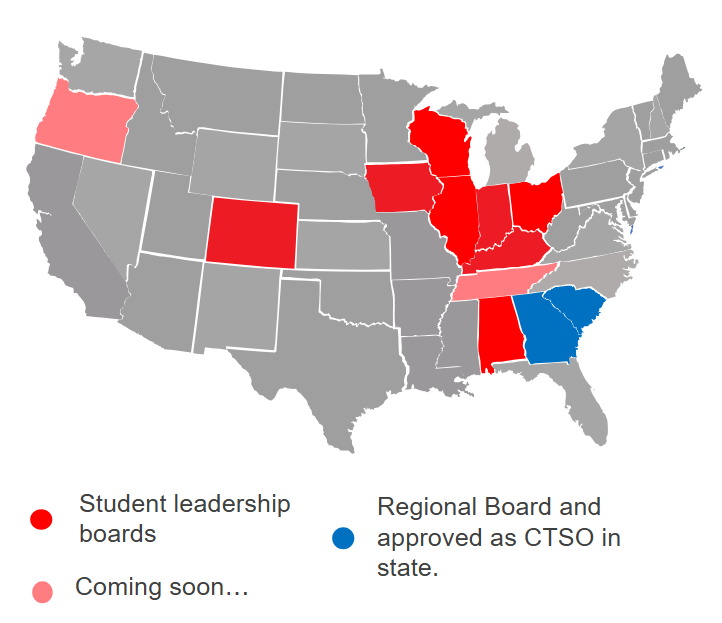
FIRST runs state-level Youth Advisory Councils (YACs) — student-led boards that exist outside any one team. They give students a real voice in how FIRST runs in their state, run advocacy campaigns for STEM education funding, partner with regional Program Delivery Partners, and drive growth of the program across schools and communities.
Active examples around the country:
- FIRST South Carolina Youth Advisory Council
- FIRST Indiana Robotics Student Board of Directors
- FIRST Canada Youth Council — an entire country’s council, run by students.
Florida doesn’t have one yet.
That isn’t a problem. That’s an opportunity. The team that helps stand up Florida’s first Youth Advisory Council will be writing themselves into FIRST’s state history. We intend to be at that table.
How a Youth Advisory Council actually works
FIRST publishes a step-by-step guide for starting one. The structure is simple and serious:
- Connect with the regional Program Delivery Partner — in Florida, that’s the FIRST in Florida network — to access shared resources.
- Formalize the council with real officer roles — President, Vice President, Treasurer, Secretary, Members, plus an adult advisor.
- Write bylaws, a mission, and core values aligned with FIRST’s Core Values.
- Stand up sub-committees for the actual work.
The four standard sub-committees from the FIRST playbook:
- Growth — expanding teams across all FIRST programs in the state, building marketing and community-relations materials.
- Sustainability — preserving institutional knowledge so the council survives graduations, plus grant writing and resource research.
- Community Outreach — starting new FLL teams, partnering with schools and libraries, volunteering at food banks and animal shelters, fundraising with local businesses.
- Equity, Diversity & Inclusion (ED&I) — making sure FIRST is genuinely accessible to every student in the state, hosting cultural-celebration events, and removing barriers.
Read that list again. That’s a real student-run organization with budgets, bylaws, partnerships, and projects. Not a club. An institution.
The highlight: advocacy at the Governor’s Mansion
This is the part that should make every reader stop scrolling.
FIRST publishes a document called From Classroom to Careers: Your State’s Blueprint for Competitive STEM Talent. It’s addressed directly to state governors. It asks them to do specific, concrete things to support FIRST in their state. The first action item on the list:
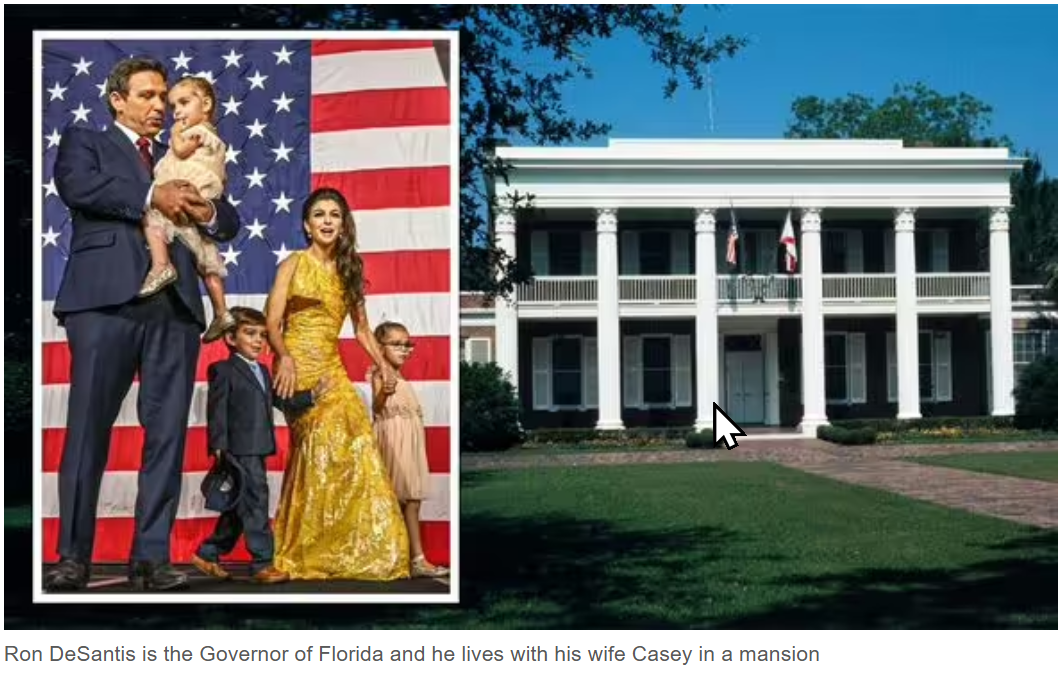
“Recognize Excellence: Host your state’s FIRST teams and champions at the Governor’s Mansion or State Legislature to celebrate student achievement.”
Read that one more time. Florida FIRST teams — including, eventually, ours — are supposed to be hosted at the Governor’s Mansion in Tallahassee. Not as a field trip. As recognized state STEM ambassadors. The advocacy plan FIRST hands to every state asks for exactly that.
The full call to action FIRST is making to Florida (and every state):
- Host FIRST teams at the Governor’s Mansion or State Legislature to celebrate student achievement.
- Designate FIRST as a Model Partnership — publicly recognize it as a leading public-private partnership preparing students for 21st-century careers.
- Proclaim and host a “FIRST Day at the Capitol” spotlighting students, employers, and educators.
- Designate FIRST as a Career and Technical Student Organization (CTSO), which lets schools integrate it into their CTE programs and unlocks Perkins funding.
- Activate already-available federal Title IV, Part A (ESSA) funds — explicitly allowed for STEM nonprofit competitions — to launch and scale FIRST teams statewide.
Every one of those is a thing a Youth Advisory Council can lobby for. Every one is a thing the State of Florida can do. And every one is a thing that, right now, is not happening because Florida doesn’t have a YAC organized to make the ask.
What this means for our team
Imagine a sentence we could put on a college application three or four years from now:
“Founding member of the Florida FIRST Youth Advisory Council. Helped draft the proclamation that established FIRST Day at the Florida Capitol. Hosted at the Governor’s Mansion in Tallahassee with state STEM leaders.”
That isn’t hypothetical. It’s the path FIRST has already mapped out for the state that decides to walk it. There is no team in Florida currently doing this work. The seat is empty.
For our students, that means: lead in your team this year, take on a council seat next year, and by junior or senior year you could be the student walking up the Governor’s Mansion steps in Tallahassee with a folder of policy asks.
We are on our way.
If that’s not leadership, I don’t know what is.
FIRST Career & Technical Education page · How to Build a Youth Advisory Council · From Classroom to Careers (PDF)